Texas · TX Daily News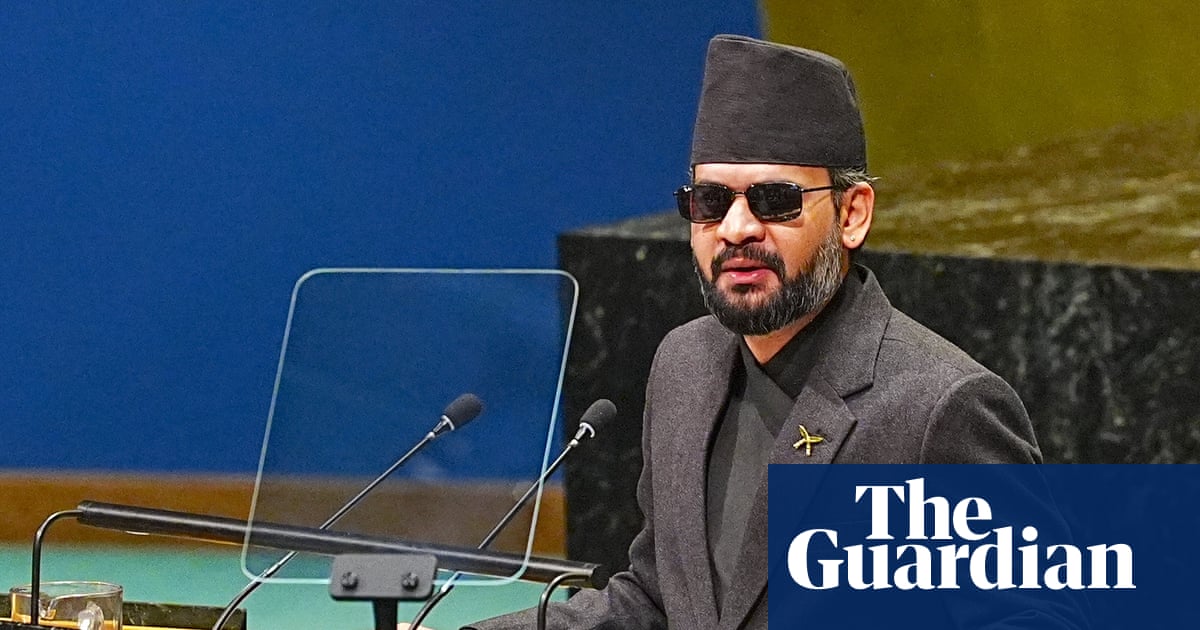
Nepal’s prime minister scolded world leaders at the UN on Thursday, saying last month’s catastrophic deadly flood was a reminder that climate change keeps hurting people who didn’t cause the crisis. The disaster “was a warning to the world,” Balendra Shah told the general assembly. “And I ask you today: Have you really heard that warning?” International scientists have connected melting permafrost caused by changes in the climate – linked to burning coal, oil and gas – to the instability of the glacier, which partly collapsed and triggered a massive flood that killed at least 1,400 people.
Shah said that Nepal contributed less than one-tenth of 1% of the heat-trapping gases behind climate change. “We did not create this crisis, yet we are paying a colossal price for it,” said Shah, 36, a former rapper and engineer, who wore a traditional Nepali hat and dark sunglasses, which he uses for medical reasons. Shah said that Nepal’s recovery and reconstruction needs were estimated at about 10% of gross domestic product following the flood that struck four weeks ago, and argued that vulnerable countries should not be forced to take on additional debt to rebuild from catastrophic climate events.
“When a climate-driven disaster destroys infrastructure of a poor country, the answer cannot simply be another mega loan or a patchwork of small grants,” he said. “We need adequate grant-based support from the world.” A woman walks past damaged houses in the aftermath of the flash floods in Trishuli. Photograph: Prakash Mathema/AFP/Getty Images He urged closer cooperation between Nepal, India and China on climate resilience, calling for an urgent Himalayan mechanism to share satellite data, monitor glacial lakes, strengthen early-warning systems and coordinate disaster responses across borders.
Shah didn’t ask for a specific amount in international aid, but he called the financial aid system inadequate and too bureaucratic. The Nepalese leader said the flood had swept away roads, bridges, schools, homes and livelihoods, interrupting Nepal’s development progress. Weeks later, search and recovery operations were still under way, with more than 6,000 people remaining missing in the area.
Shah said many of them may never be found. The World Bank earlier this week made available up to $170m in emergency financing to help Nepal respond to the disaster and begin recovery efforts. Over the past 75 years, the US has emitted about 1,500 times more carbon into the air than Nepal, according to the Global Carbon Project, a group of scientists that track greenhouse gas emissions.
The US this week announced $31m in aid to Nepal for flood recovery, which brings America’s total financial help up to $36m. Shisir Khanal, Nepal’s foreign minister, said Wednesday at the UN climate summit: “What happened in Nepal is not an isolated disaster but a preview of what awaits many vulnerable nations.” Speaking to the Guardian earlier this month, Khanal said Nepal had written a joint letter to the UN’s fund for responding to loss and damage – set up in 2022 in line with the Paris climate agreement – to request $20m in climate-related damages .
Source: The Guardian